Best Fish Tank Filters for Aquariums: Types, Picks & Buying Guide (2026)
Last updated: October 2, 2026 · Reviewed by the BestFishTankFilters editorial team
Choosing among the best fish tank filters comes down to three numbers: how many gallons your tank holds, how much water the pump moves per hour, and how much hum you'll tolerate in the room. Get those right and the water stays clear, the fish stay calm, and upkeep shrinks to a quick monthly rinse. Get them wrong and you'll chase cloudy water and ammonia spikes for months. This guide is for first setups and for anyone replacing a tired filter. We compare external, clip-on, foam and internal designs by GPH, tank fit and noise, then rank nine picks we'd happily run ourselves.
As an Amazon Associate we earn from qualifying purchases. It never changes which model we rank first.
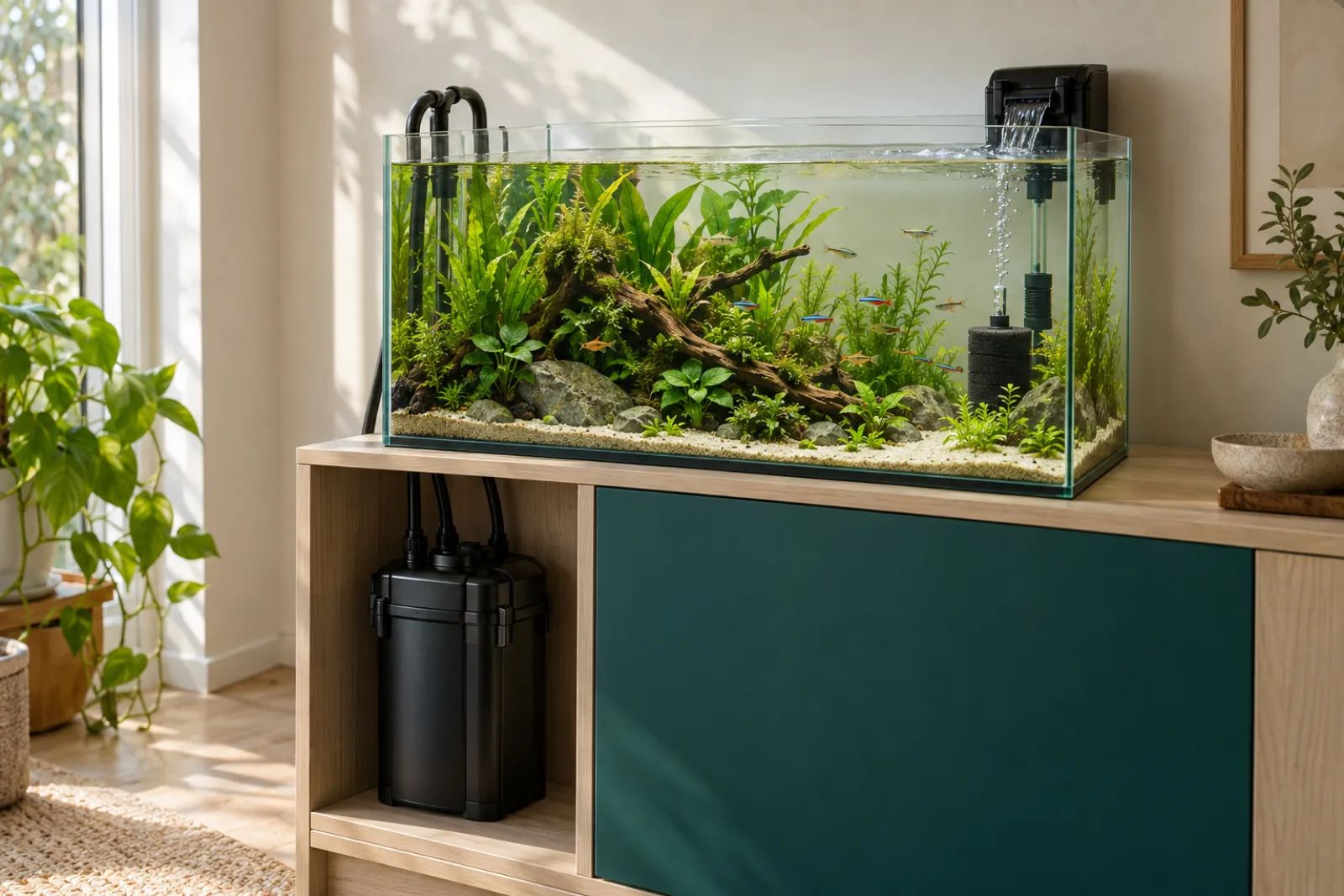
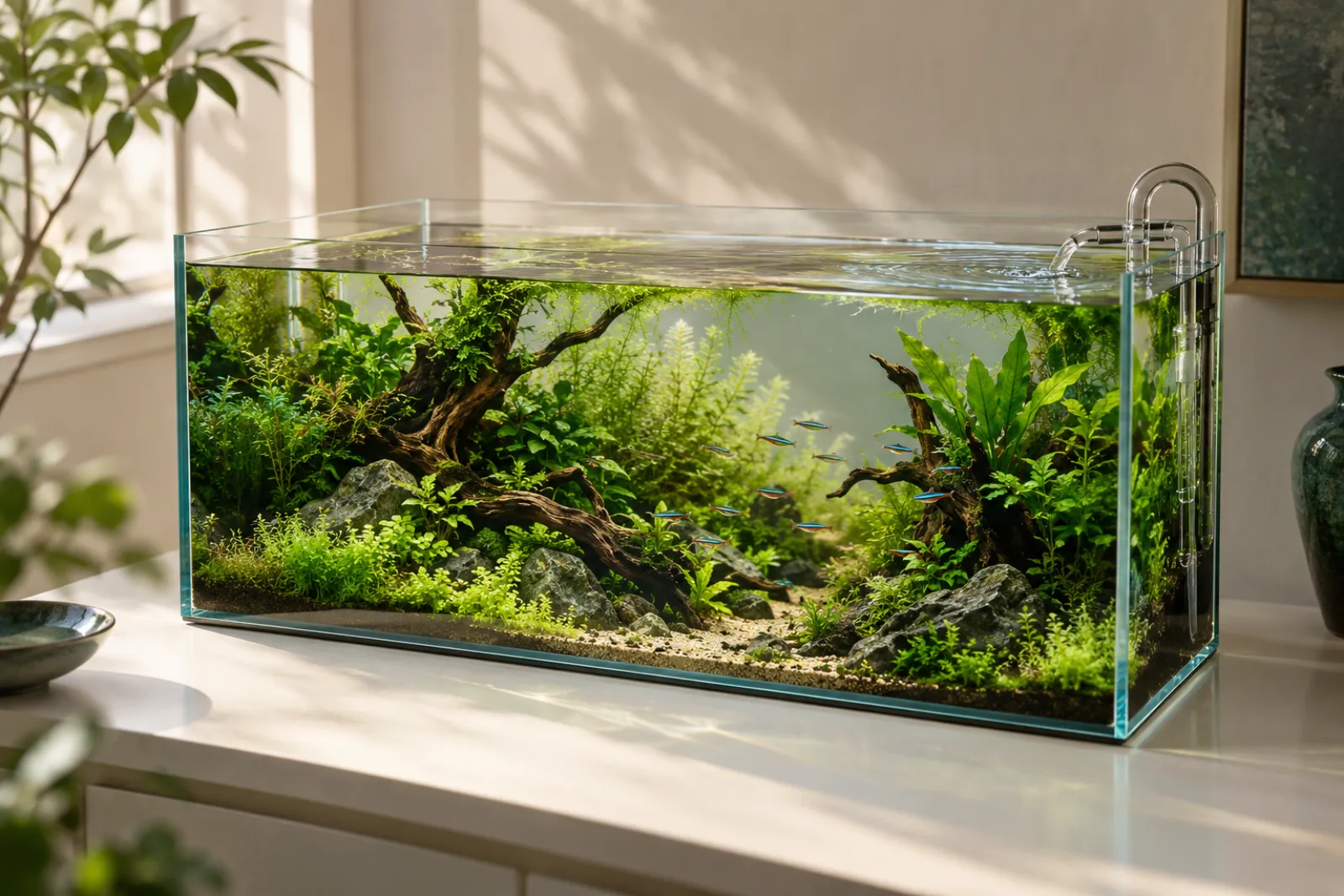
Three filter types beside a crystal-clear planted aquarium
#1 pick
Fluval FX4
Rated GPH
700
Best tank fit
40–250 gal
Quick Picks: Best Fish Tank Filters by Type, Budget & Tank Size
Short on time? Each pick below links to its full review, specs, pros and cons.
Best Overall Fish Tank Filter
Pick #1: a four-stage external filter rated for tanks up to 250 gallons. Smart pump, self-priming start, quiet enough for a bedroom. It's the best filter we've found for owners who want to set it up and mostly forget it.
Best Budget Aquarium Filter
Pick #2 brings big media capacity and a built-in UV lamp on the 304B version at a budget-tier price. Plainer finish, same muscle.
Best Canister Filter
For 40 to 150 gallons, #1 still wins on reliability. Running something around 20 to 45 gallons? The compact #5 is the smarter fit and takes less cabinet space.
Best HOB (Hang-On-Back) Filter
Pick #3 for a classic bio-wheel design new owners can't really set up wrong. Pick #6 if you want more control and a skimmer built in.
Best Filter for Large Tanks (100 Gallon+)
Pick #4, our overall winner's big brother, built for 125 gallons and up.
Best Quiet Aquarium Filter
Pick #8, an air-driven foam filter. The only sound is the air pump, and a good one on a soft pad is barely audible. It's the quiet filter we'd put in a nursery or office.
Amazon prices and stock move daily, so check today's price before you decide.
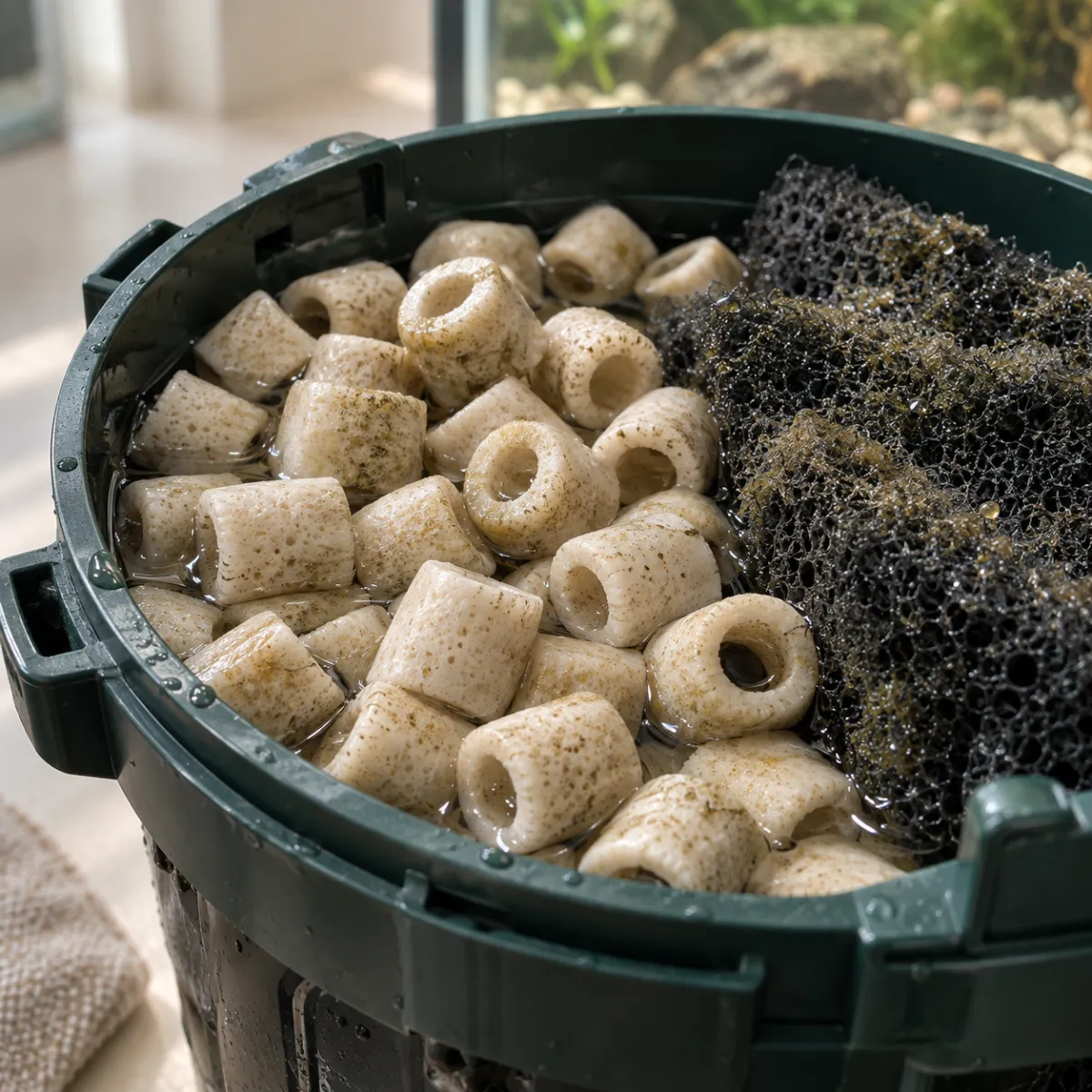
Macro: ceramic rings and coarse foam in an opened canister tray
Why Aquarium Filtration Matters for Fish Tank Health
A tank is a closed box. Every flake of fish food, every bit of waste and every dying leaf breaks down into ammonia, and only your filter carries it away. Undersize it and water quality falls apart fast.
The Ammonia and Nitrite Cycle
Fish release ammonia through their gills and waste, and even small amounts burn gill tissue. In a cycled tank, one group of bacteria converts ammonia to nitrite (still toxic), and a second turns nitrite into nitrate, which is far less harmful and gets diluted every time you do a water change. Until both colonies are established, ammonia and nitrite build up. That's the main reason fish die in brand-new tanks. Plan on four to six weeks to cycle from scratch.
Beneficial Bacteria and Biological Filtration
Those bacteria don't drift in open water. They live on surfaces, and the media inside your filter is the biggest, best-oxygenated surface within the tank system. A mature foam block or ceramic ring colonized with beneficial bacteria is worth more than the plastic housing around it. So rinse media in old aquarium water, never tap water: chlorine wipes out the colony you just spent a month growing.
Signs Your Aquarium Filter Isn't Working
Water turns cloudy a day or two after cleaning
A sour or rotten-egg smell near the surface
Outflow visibly weaker than when the filter was new
Fish hanging at the surface or breathing fast
Any ammonia or nitrite reading above zero on a test kit
Two or more of these mean the filter is clogged, undersized or failing. A healthy fish tank shows none of them.
Types of Aquarium Filtration: Canister, HOB, Sponge & More
No single design wins on every tank. Here's how the main categories in fishkeeping trade flow, capacity, noise and effort.
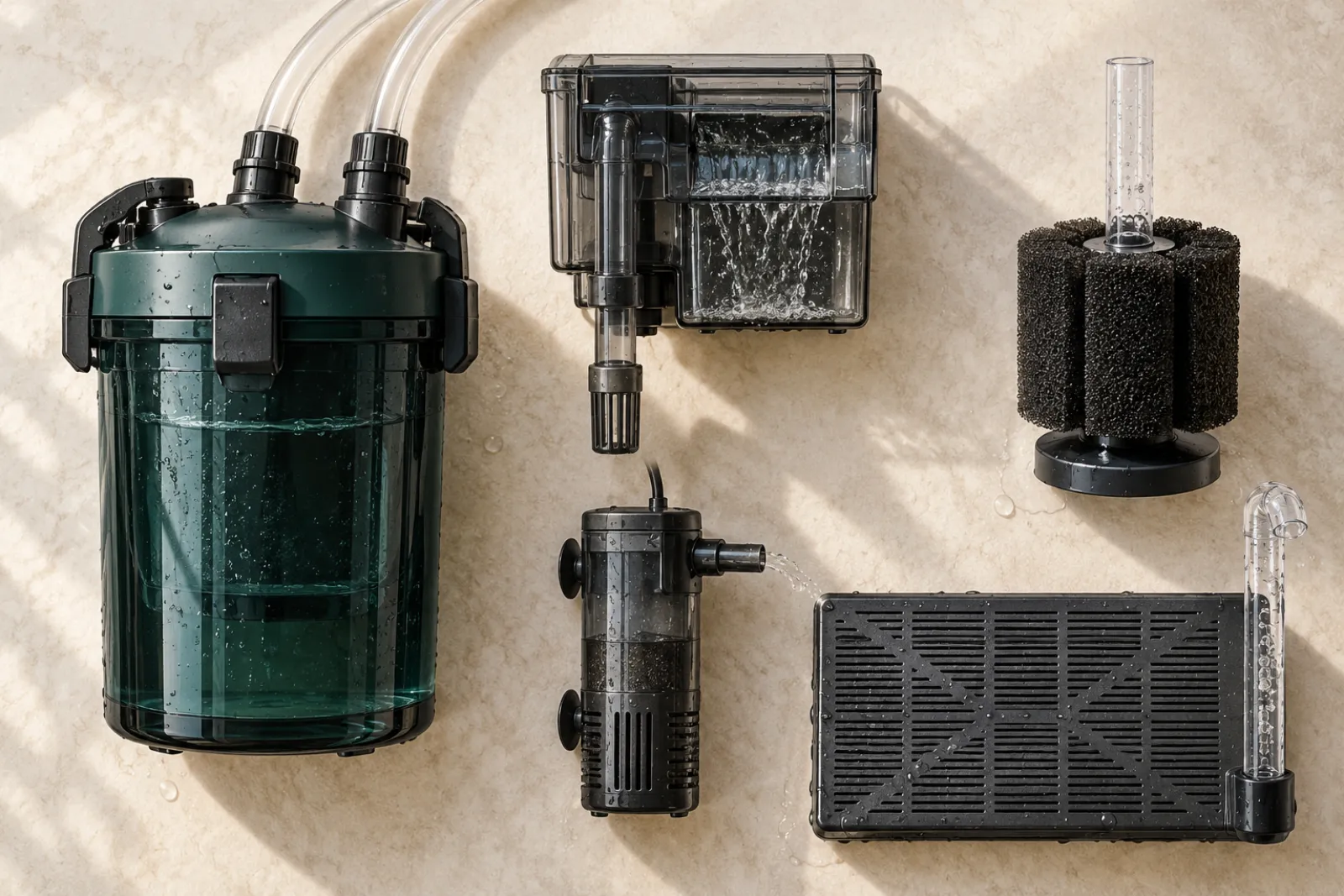
Five filter types side by side with water-flow arrows
Canister Filters (External Canister Filter)
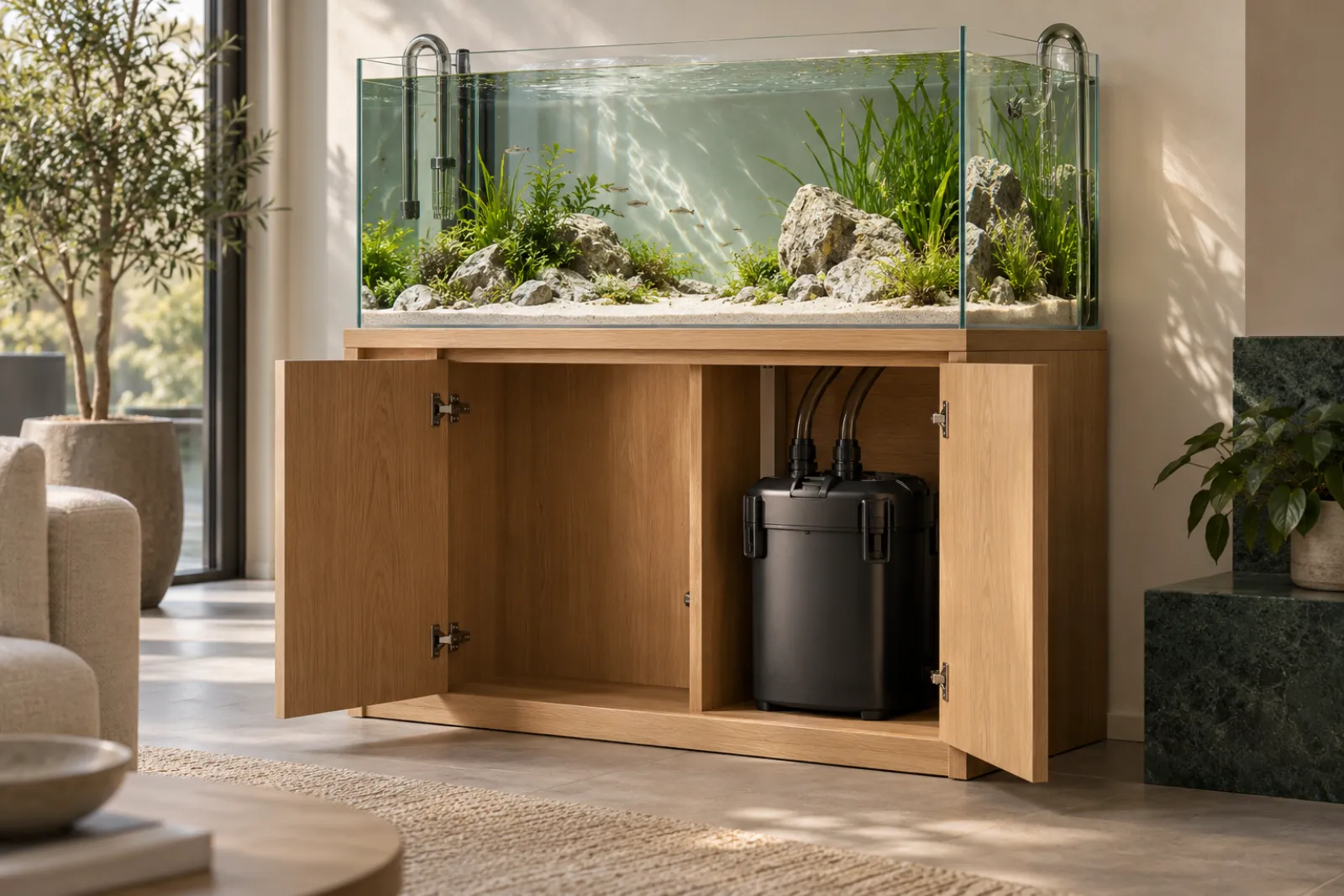
An external canister filter sits in the cabinet below the tank. Hoses pull water down into a sealed housing packed with stacked trays, and a pump pushes it back up. The housing is big, so you get far more media volume than any clip-on model, and that extra biological capacity is exactly what heavily stocked tanks need. Some listings spell it "cannister." Same product.
Aquarium Canister Filter Pros and Cons
An aquarium canister filter gives you the most capacity per watt, near-silent running and nothing hanging in view. The trade-offs are real, though. Setup takes longer, a loose hose clamp can flood a floor, and a deep clean means disconnecting lines. Most owners open theirs every four to eight weeks, against every two weeks for a clip-on.
HOB / Hang-On-Back Power Filters
Hang on back filters clip over the rim, pull water up an intake tube and spill it back through a cartridge or media basket. They're cheap to start, simple to service and great for 10 to 75 gallons. Anything you hang on the back of the glass gets called a power filter too; the names overlap. The downsides: lid cut-outs, waterfall noise when the level drops, limited media space.
Sponge Filters
An air pump pushes bubbles up a tube, which drags water through a coarse foam block. That's the whole design. Sponge filters are dirt cheap, can't suck up fry or shrimp, and grow huge bacteria colonies. They won't polish water to crystal clarity, and airline tubing isn't pretty, but for breeders, bettas and quarantine tanks they're hard to beat.
Internal Filters
An internal filter is a submersible pump and media box that suction-cups to the glass. Good for nano setups, shallow turtle tanks and quick hospital tanks. It eats swimming space, and the small chamber clogs faster than external models do.
Undergravel Filters (UGF)
A UGF uses a slotted plate under the substrate, so the gravel bed becomes the media. It still works in simple fish-only tanks, but debris collects under the plate and rooted plants hate it. Most people now pair it with a powerhead or skip it.
Pond Filters for Outdoor Setups
Pond filters handle huge volumes and heavy debris. Some pressurized models cross over nicely onto very large indoor tanks, which is why one made our list.
Fish Tank Filter Comparison Table: GPH, Tank Size & Noise
Every pick side by side. GPH figures are manufacturer ratings; real output drops once media is loaded, so size generously.
GPH means gallons per hour, the volume a pump moves with nothing in its way. Turnover is GPH divided by tank volume. Community tanks do well at four to six turnovers an hour; messy fish want eight or ten. So a 100 gallon setup needs at least 400 GPH, and a cichlid version of that tank could justify double. Buy above the number you need. A packed tank canister filter often delivers well under its label.
Noise Level Comparison
Noise comes from the motor, a rattling impeller and falling water. External models hide the motor in a cabinet, so they win. Clip-on designs make a soft trickle that gets louder as the water level drops. Air-driven foam is only as loud as its pump.
Price and Value Comparison
Budget models cost less up front, but proprietary cartridges add up. Premium externals cost more on day one, then run for years on rinse-and-reuse media. Over a few years the gap shrinks a lot.
Prices change often on Amazon, so check today's price for the size that matches your tank.
Best Fish Tank Filters Reviewed: Top Picks for 2026
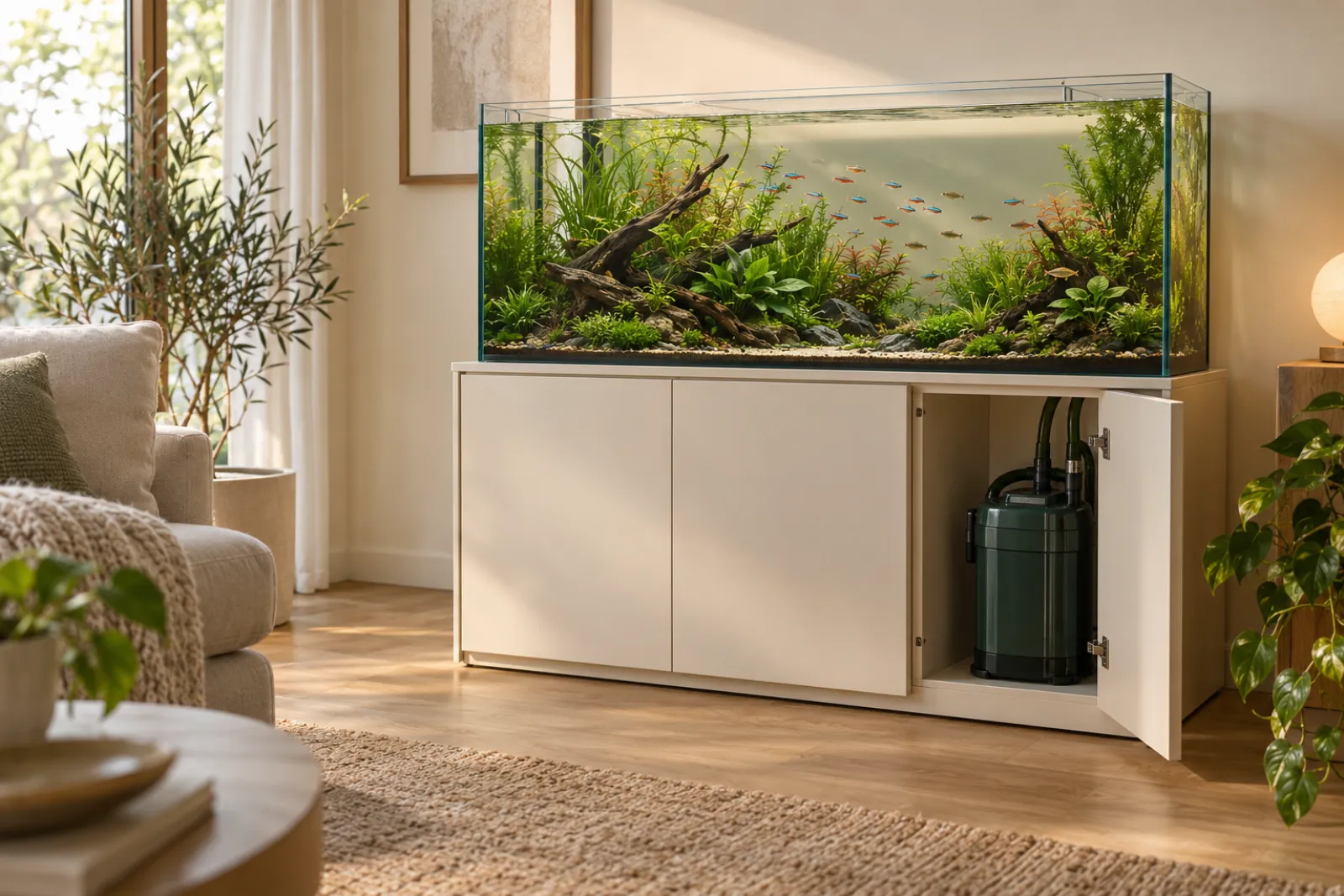
Canister filter in an open wooden stand, hoses up to a 75-gallon tank
01
Rank #1 of 9
Best Overall: Fluval FX4 Canister Filter
Type
External
Rated GPH
700
Best tank fit
40–250 gal
Noise
Very quiet
Price tier
Premium
Our top pick runs a smart pump that purges trapped air by itself every 12 hours, so flow doesn't slowly fade the way it does on older designs. Three large baskets leave room for coarse foam, fine pads and a lot of biomedia. A bottom drain valve lets you empty it without lifting a full housing. Overkill for 30 gallons, ideal at 75 to 150.
Pros
self-priming, very quiet, huge media volume, drain valve
Cons
premium price tier, tall housing needs a deep cabinet
The value pick forums keep recommending. You get stacked trays, a priming button and, on the 304B, a UV sterilizer that clears green water fast. Latches and hose fittings feel cheaper than premium rivals, so check them at every service. For a 75 on a budget, it's hard to argue with.
Pros
strong output for the tier, built-in UV, plenty of tray space
Budget models sell out often, so check current stock.
03
Best HOB Filter: Marineland Power Filter
Type
Clip-on, bio-wheel
Rated GPH
350
Best tank fit
50–70 gal
Noise
Low trickle
Price tier
Budget
The Penguin's spinning bio-wheel sits half in air, half in water, giving bacteria a constant oxygen supply. The payoff is very stable water even when a cartridge is overdue. Setup takes about five minutes, and the whole thing is easy to maintain. Cartridges are a recurring cost, but rinsable foam fits fine if you'd rather skip them.
Pros
forgiving for beginners, bio-wheel stability, quick install
Cons
proprietary cartridges, the wheel can squeak if it dries out
Our top pick, scaled up for big cichlid setups, large planted displays and monster fish. It runs on a 100 too, but expect strong current unless you spread the outflow with a spray bar.
Pros
massive capacity, quiet for its size, self-priming
Cons
very tall, too much flow for small or gentle setups
Large-tank models swing in price, so check today's deal.
05
Best for Small Tanks: Fluval 207 Canister Filter
Type
External, compact
Rated GPH
~200
Best tank fit
20–45 gal
Noise
Very quiet
Price tier
Mid-range
Real external performance for 20 to 45 gallons without hogging the stand. Push-button priming, a decent basket, smooth and quiet output. It's a clean upgrade if you're tired of lid gaps and trickle noise.
The biggest clip-on worth buying. Adjustable flow, a self-priming pump that restarts after a power cut, and a built-in surface skimmer that pulls oily film off the top. The basket takes any loose media, so you're not locked into cartridges. A great choice for a heavily stocked 55.
Pros
strong output, skimmer, flexible media, restarts on its own
Cons
sticks out far behind the tank, bulky on small stands
A small submersible with adjustable output and a spray bar for nano, shrimp and shallow turtle setups. Its compact foam clogs faster than bigger designs, so rinse it every week or two.
Pros
tiny footprint, adjustable output, gentle enough for bettas
Dense foam, a weighted base and a simple lift tube. It won't suck up fry, shrimp or a betta's fins, and it builds a big bacterial colony within a few weeks. Many breeders run two per tank so one can be squeezed out while the other keeps the colony going.
Pros
near silent with a good air pump, safe for fry, very cheap to run
Multi-packs often save money, so check the latest bundle.
09
Best for Pond-to-Aquarium Crossover: OASE BioMaster
Type
External + prefilter
Rated GPH
Varies by model
Best tank fit
90–160 gal
Noise
Very quiet
Price tier
Premium
The standout is an outside-access prefilter: you clean the coarse foam without opening the main chamber or disturbing the bacteria. That split is ideal for big, messy indoor tanks and stock tanks with pond-style debris. The Thermo version adds a built-in heater.
Pros
prefilter cleans without opening the housing, build quality, heater option
Cons
premium tier, bulky, spare parts can be harder to find
Gallons are half the story. Small tetras and big cichlids in the same volume need very different capacity. Choosing a filter based on gallons alone is the most common mistake we see.
Filters for 10 Gallon and Nano Tanks
Up to 10 gallons, gentle beats powerful. A foam filter or small internal is plenty, and a betta tank especially needs low current since long fins struggle in strong flow. In a nano tank of five gallons or less, make sure the intake is guarded so shrimp don't get pulled in. Moving up to a 20 gallon? A compact clip-on or small external both work. One rule for any small tank: oversized flow causes more problems than it solves.
Filters for 55 Gallon and 75 Gallon Tanks
Most owners land here. On a 55 gallon tank, a large clip-on like #6 or a mid-size external handles a normal community load easily. With bigger fish, step up to a full-size external or run a clip-on plus a foam filter. Two filters also give you a backup colony if one fails.
Filters for 100 Gallon and Larger Tanks
Past the 100-gallon mark, a single clip-on won't keep up. Plan on a large external at minimum, and for a 125 gallon tank or bigger, consider two externals or an external plus a sump. Smaller tanks forgive mistakes. Big ones don't, because a failure means a lot of water and a lot of expensive fish.
Filtration for Heavy Bioload Tanks (Cichlids, Goldfish)
African cichlids and fancy goldfish produce far more waste than their size suggests. Push turnover toward eight to ten times per hour and double the biomedia you'd normally run. Fancies swim slowly, so spread that flow with a spray bar rather than a single jet, and add an intake prefilter to catch heavy debris before it chokes the main media.
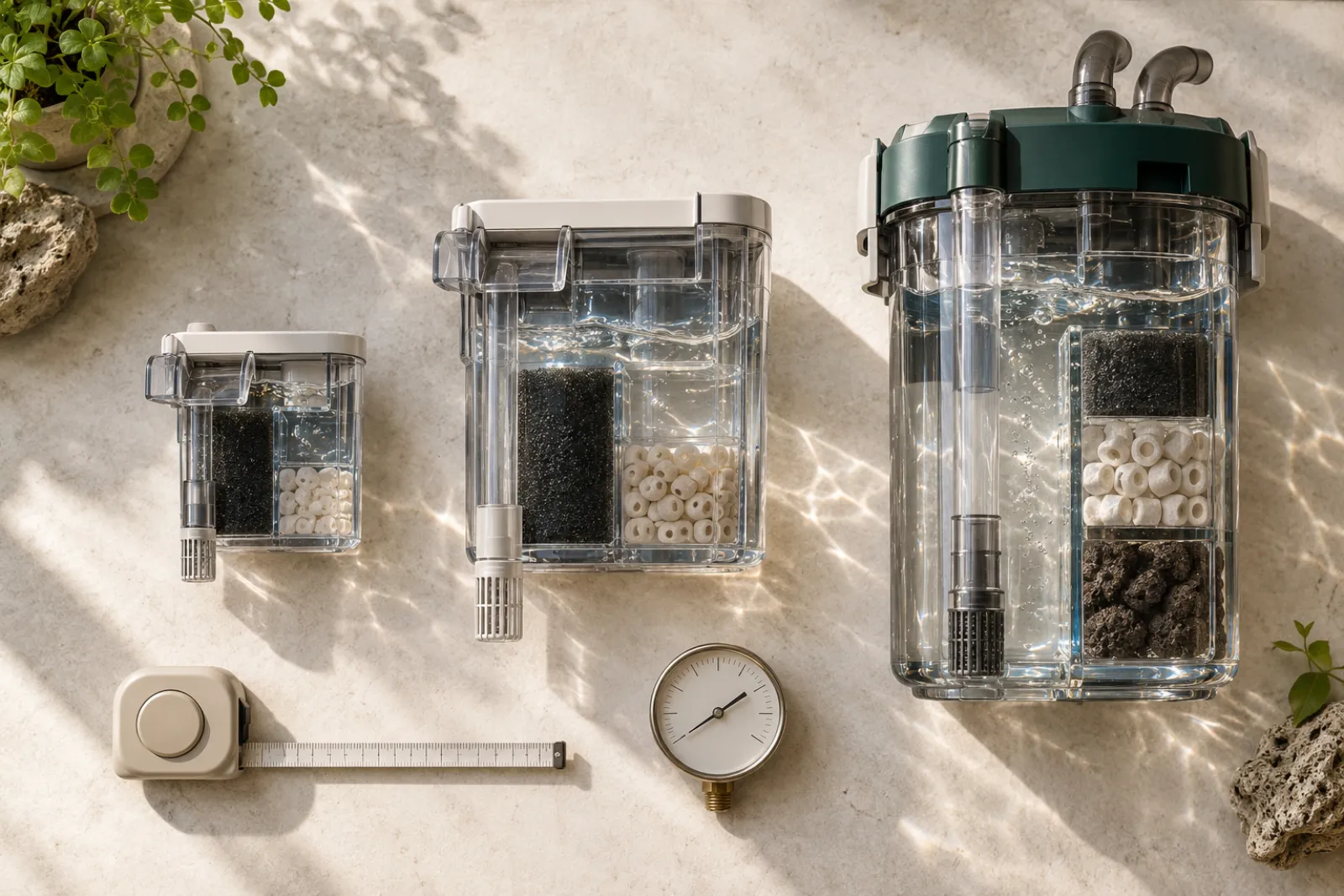
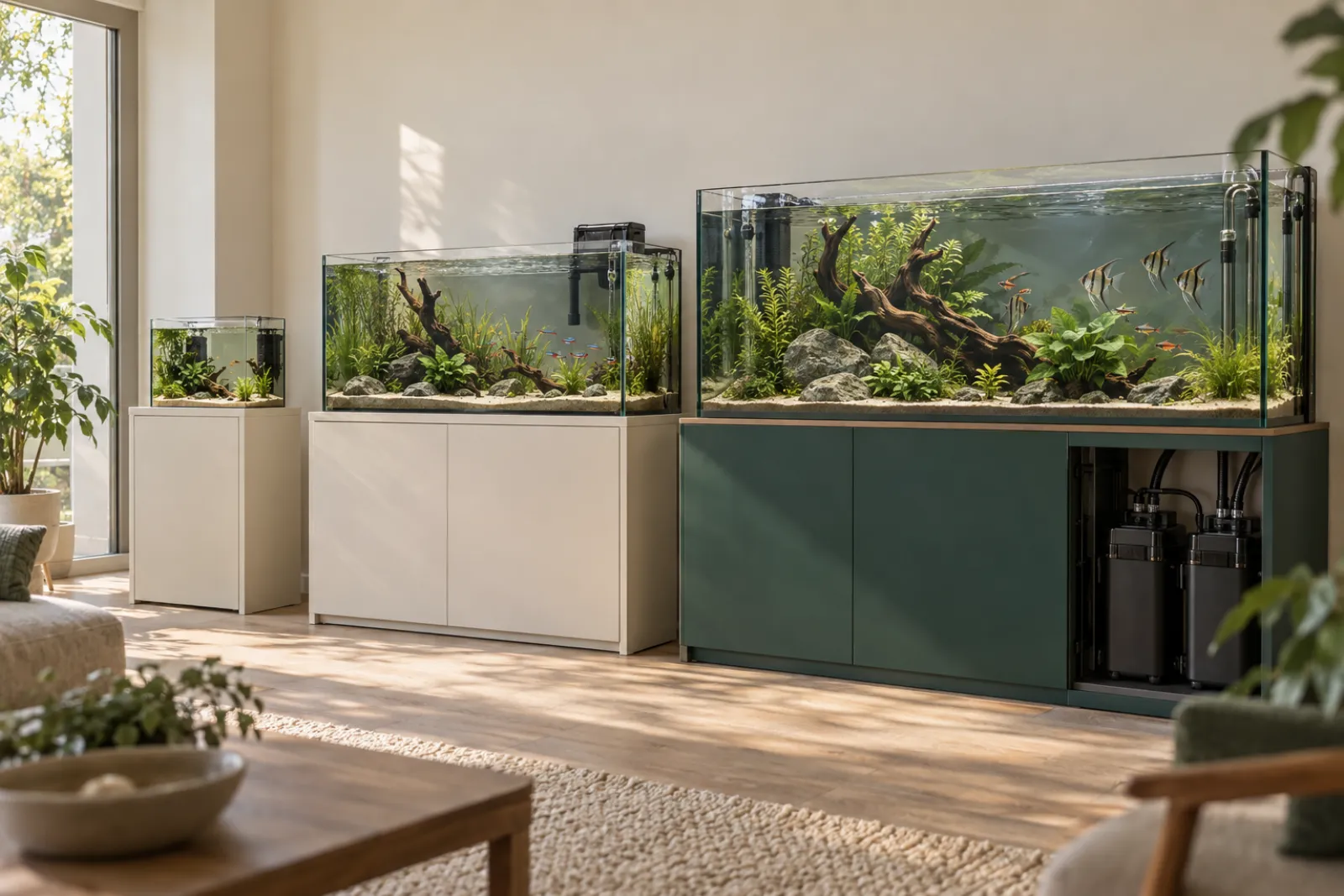
Nano, 55-gallon and 125-gallon tanks, each with a sized filter
How to Choose the Best Aquarium Filter: Key Buying Factors
These six factors separate the best aquarium filter for your setup from one you'll replace next spring.
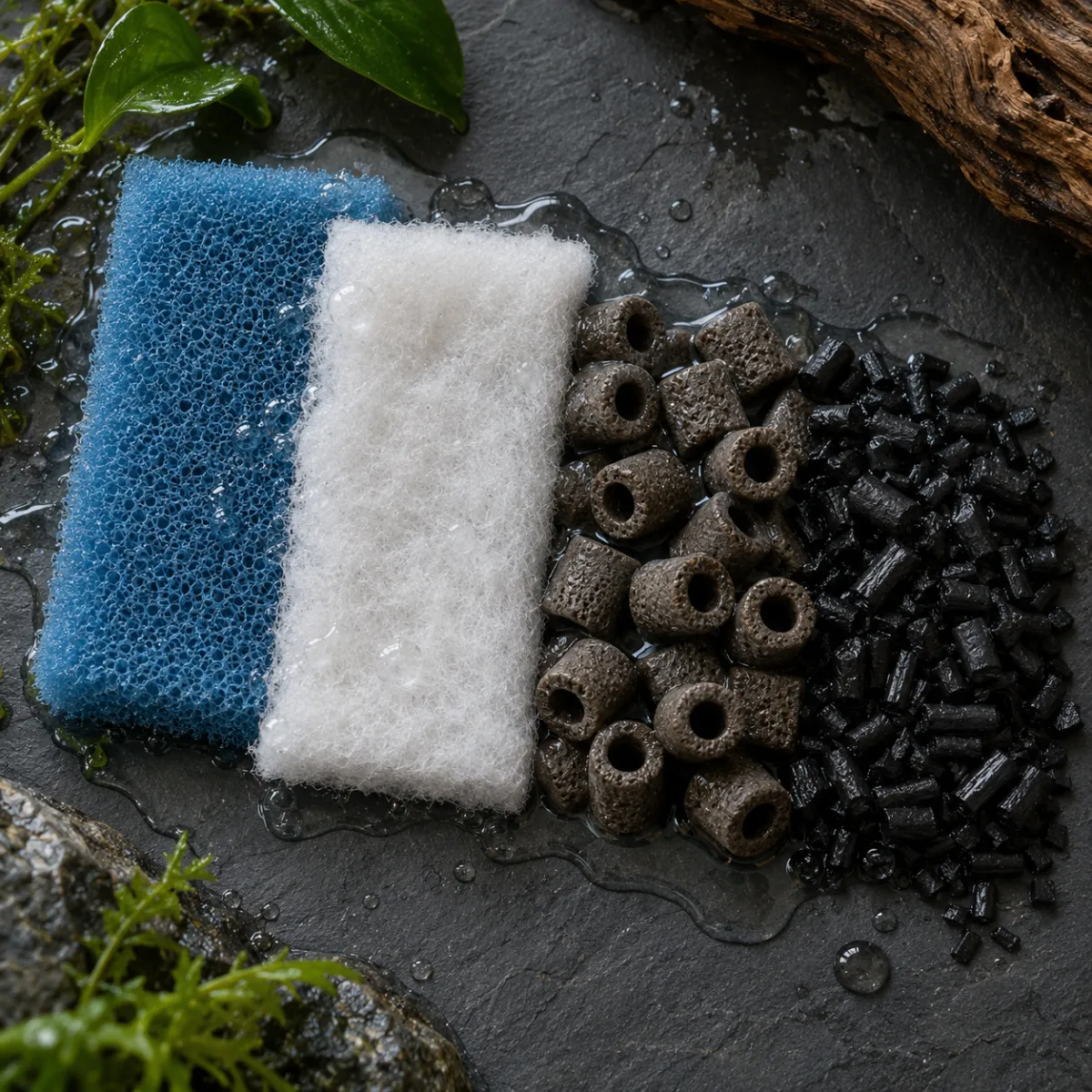
Flat-lay of filter media in stacking order on dark slate
Filter Media: Mechanical, Chemical & Biological
Filter media does three jobs. Mechanical media (foam, pads) traps particles. Biological media (ceramic rings, sintered glass, porous stone) houses bacteria. Chemical media such as activated carbon removes odors, tannins and medication residue. Pick a filter that takes multiple media types in separate trays, because order matters: coarse to fine, then bio, then chemical.
Poly Fiber Pads and Filter Floss
Poly fiber pads and floss are the fine polishing layer behind that "fish floating in air" clarity. They clog fast and they're cheap, so treat them as disposable. Put them last in the mechanical stage, never ahead of the coarse foam, or they'll gum up in days.
Flow Rate and Water Circulation
Check the rated flow rate against your volume using the turnover rule above, then look at where water actually moves. Good water circulation means no dead spots behind rocks where debris settles. Long tanks often need a spray bar or a small powerhead at the far end.
Noise Level and Aeration
In a bedroom, noise matters as much as GPH. Externals are quietest. Clip-ons add surface agitation, which helps aeration and oxygen exchange, plus some trickle noise. An air-driven foam filter brings gentle bubbles, great gas exchange and only the hum of its pump.
Cost, Maintenance and Replacement Filter Media
The sticker price is just the start. Proprietary cartridges and replacement filter pads are where the money goes over time. Designs that accept loose foam and ceramic rings are cheaper to run and easy to clean. Ask how long a service takes and whether you can reach the filtration media without unplugging hoses.
Pre-Filter Sponges and High-Flow Options
A pre-filter sponge slipped over the intake is the cheapest upgrade you can make. It stops shrimp and fry from being pulled in and catches debris before it hits the main media. If you need high flow for a big or messy tank, pair a strong pump with an intake guard so output stays steady between cleanings.
Found the factor that matters most for your setup? Check today's price on the matching pick.
How We Tested Fish Tank Filters: Methodology & Results
Spec sheets show a pump with empty baskets. We care about a real cabinet, real media, after a month of feeding and waste.
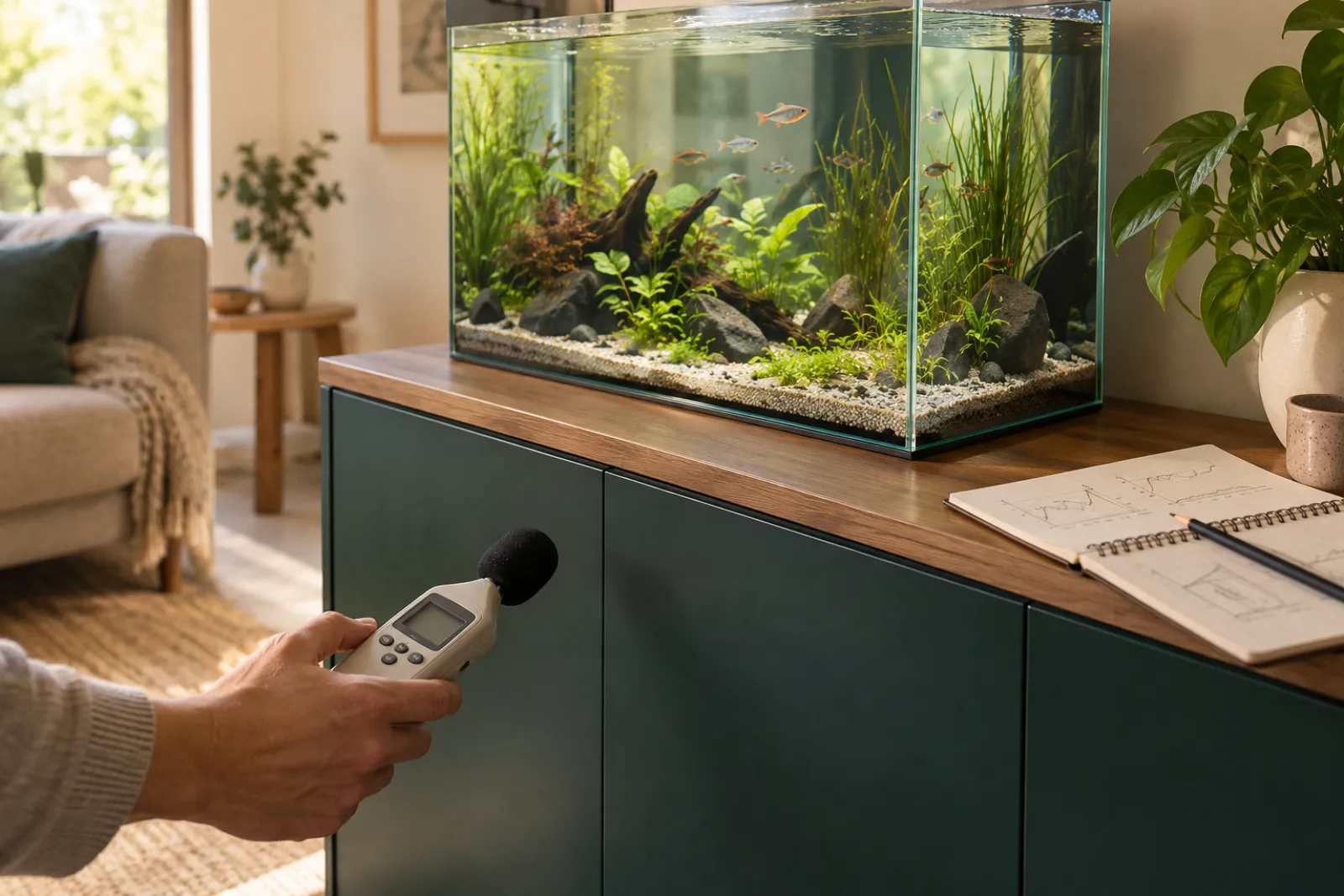
Handheld decibel meter near a closed aquarium cabinet
GPH and Noise Measurements
Hands-on testing means running each filter with its stock media loaded, then comparing output against the label after a few weeks of use. Noise is read with a basic meter in decibels at roughly three feet, cabinet closed, then reported in bands (very quiet, quiet, audible), because rooms and stands skew raw numbers.
Real Fishkeeper Tanks Used for Testing
We judge every model against setups a typical fishkeeper actually owns: a nano shrimp tank, a small community tank, a mid-size stocked tank and a heavily loaded cichlid tank. Each filter's score covers clarity, ease of service, restart after a power cut and how it copes with a missed cleaning.
Last Updated: Our Review Process
This page was last updated in October 2026. We re-check every pick when a model is revised or discontinued and drop anything that stops earning its spot. Reader reports of failures count too.
Best Filters for Specific Aquarium Setups
Aquascaped planted tank with a glass lily pipe outflow
Filters for Planted Tanks and Aquascaping
Planted tanks want steady, even flow and little splashing, which drives off the CO2 plants need. An external filter with a lily pipe outflow is the aquascaping standard. Skip carbon if you dose fertilizer; it can strip some trace elements.
Filters for Goldfish and Betta Tanks
Opposite ends of the scale. Fancies need oversized capacity, at least double the usual turnover. Bettas need almost none: a foam filter or a baffled internal at low output. Never put a strong clip-on on a 5-gallon betta setup.
Filters for Turtle Tanks
Turtles eat messily and make waste like fish three times their size. Size up: an external rated for at least twice your actual water volume. Low water levels rule out most clip-ons, so an internal or external is usually right, even for a nano aquarium-sized turtle setup.
Frequently Asked Questions About Fish Tank Filters
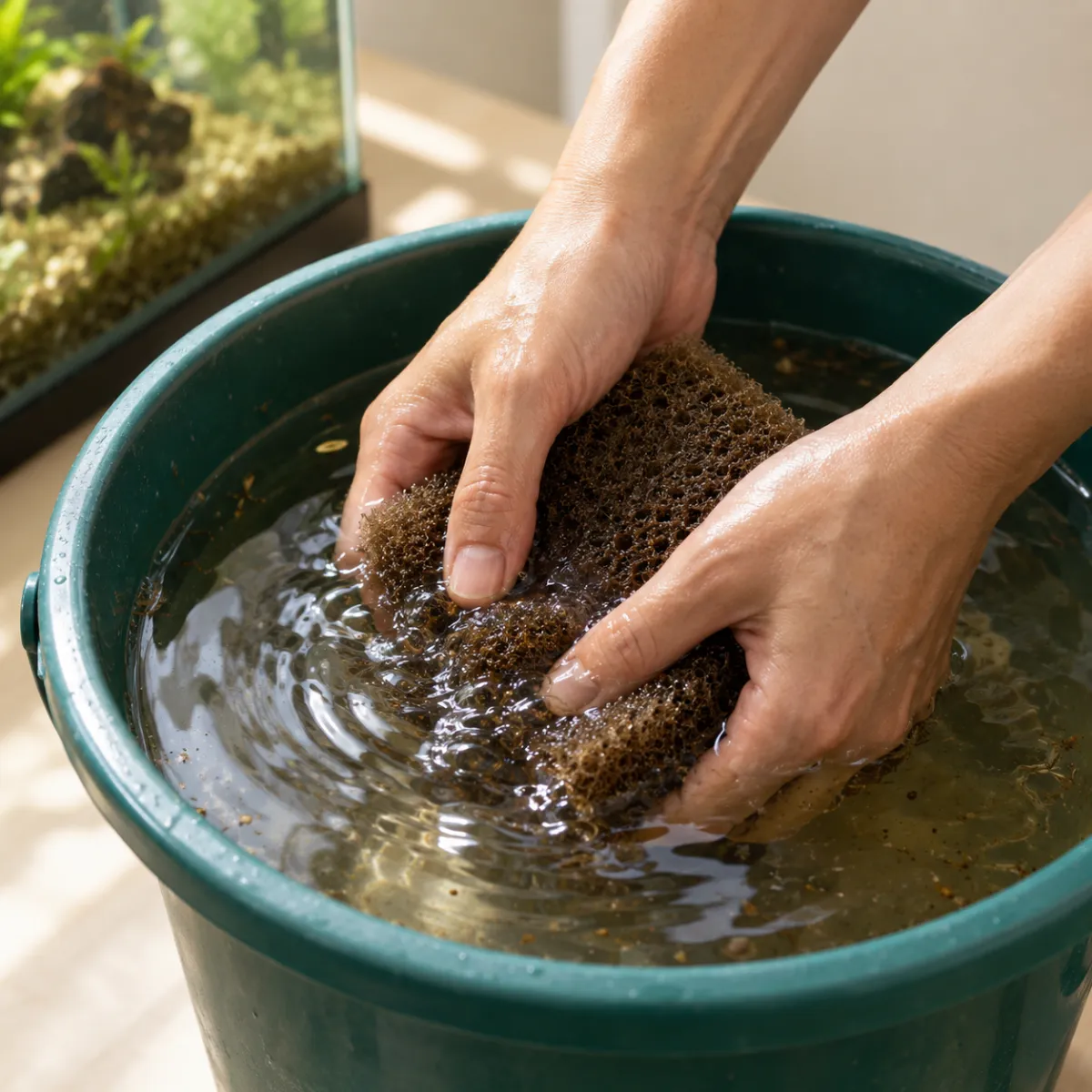
Hands squeezing a sponge filter into a bucket of tank water
What Is the Best Filter for a Fish Tank?
For most tanks between 40 and 150 gallons, a quality external like our #1 pick. Under 30 gallons, a foam or compact external is usually the better choice. Which filter is best depends on tank size and stock first, brand second.
What Is the Best Type of Filtration for an Aquarium?
A combination. The best filtration setup runs mechanical, biological and chemical stages together, and externals do that most completely. For low-tech or breeding tanks, an air-driven foam filter is all you need.
What Are the Different Types of Aquarium Filters?
External, clip-on (power), air-driven foam, internal, undergravel, sump and wet/dry trickle designs. The types section above covers the pros and cons of each.
Is an Aqueon or Tetra Filter Better?
Both make solid entry-level HOB filters. The Aqueon QuietFlow tends to run quieter and has an LED that warns you when it needs service; the Tetra Whisper is simpler and cheap to keep running. For a beginner setup under 30 gallons, either works.
How Often Should You Clean or Replace Aquarium Filter Media?
Rinse mechanical foam every two to four weeks in old tank water. Replace poly pads when they won't rinse clean, carbon every three to four weeks, and biomedia almost never. Swapping all media at once restarts the cycle, so stagger it, and the same goes when you install a new filter: run it beside the old one for a few weeks.
Are Aquarium Undergravel Filters Considered Obsolete?
Mostly, yes. Undergravel filters still work in simple setups, but debris builds under the plate and plants struggle. Modern designs are far easier to service.
Are Sponge Filters Effective in Fish Aquariums?
Very. They're among the most effective biological options, especially for fry, shrimp and bettas, and a lightly stocked tank can run on them alone. Just provide plenty of water movement with a decent air pump.
What Is the Best Filter Media for Fish Tanks?
The best media for fish tanks is a layered stack: coarse foam, fine pads, then porous ceramic or sintered glass. Add carbon only to clear tannins or meds.
How Does a Fish Tank Filter Keep Tank Water Clean?
A fish tank filter pulls water through foam to trap debris, past bacteria that convert ammonia, and sometimes through carbon. That loop keeps the water clean between your weekly maintenance, and it's why fish owners who skip cleanings see cloudy water first.
HOB vs In-Tank Aquarium Filters: Which Is Better?
A hang-on-back design gives more media space and keeps swimming room open. In-tank models suit nano setups and low-water turtle tanks. Past about 25 gallons, the clip-on is usually the better buy.
Still deciding? Check today's price on our top-rated pick.
Want one answer? Go external. Our top pick is the safest buy for 40 to 250 gallons: quiet, self-priming, and big enough on media to stay stable through a missed cleaning. On a tight budget, #2 delivers similar capacity for less. For nano setups and bettas, a foam filter does the job beautifully. Match the filter to your volume and bioload, size up when unsure, and you'll spend more time watching fish than fixing water.